Social Media and Probable Cause: The Legal Framework
The Fourth Amendment requires that a search warrant be supported by probable cause: a reasonable belief, based on articulable facts and circumstances, that evidence of a crime will be found in the place to be searched. The standard is practical, not technical. Courts ask whether a reasonably prudent person, looking at the totality of the circumstances, would conclude there is a fair probability that evidence of criminal activity is present.
Social media content fits naturally into this framework because it often provides exactly what probable cause requires: direct evidence of criminal activity, connected to a specific location, with timestamps that establish the currency of the information. A photo posted publicly to Instagram showing a firearm displayed inside a specific residence, with the poster identifying their address in the caption, can support a warrant to search that residence for an illegally possessed firearm. Courts have upheld warrants supported by this kind of social media evidence search warrant basis across a wide range of offense types.
The key principle is that social media evidence probable cause is evaluated the same way as any other evidence in the affidavit: it contributes to the totality of the circumstances analysis. It does not need to be sufficient on its own to establish probable cause; it may combine with other investigative information. But it must be reliable and it must be authentic, which is why how the evidence was captured and documented matters as much as what the evidence shows.
What Social Media Content Can Support a Warrant
The types of social media content that investigators most commonly use in search warrant affidavits include:
Posts Showing Contraband or Weapons
Photographs posted to Instagram, Snapchat, or TikTok showing firearms, drugs, currency, or stolen property are direct evidence of potential criminal activity. When the post contains location data, identifies the property where the item is located, or is made from an account connected to a known suspect, the foundation for a search warrant begins to form. The critical step is capturing the post with its full metadata, including the timestamp and any embedded location data, before it can be deleted.
Communications About Criminal Activity
Public comments, group posts, and open platform threads sometimes contain explicit references to criminal activity: discussions of drug transactions, coordination of planned crimes, announcements of illegal services, or boasting about completed offenses. When these communications are public-facing rather than private messages, no warrant is needed to view them. The challenge is authentication and preservation: an investigator who finds relevant content and fails to preserve it forensically before it is deleted may lose the evidence that supported their probable cause finding.
Location Information and Check-Ins
Social media posts that tag a specific location, include a check-in at a business or residence, or show recognizable environmental details can establish a nexus between a suspect and a place. If an investigation establishes that a suspect is selling controlled substances, and that suspect's social media repeatedly shows them posting from the same residential address, that location data can support a search of that residence for evidence of the drug activity.
Account Association and Network Evidence
Social media investigations often reveal networks of accounts associated with criminal activity: co-defendants who comment on each other's posts, shared photographs that appear on multiple accounts, or followers/following relationships that corroborate organizational structure. This network evidence can support warrants targeting multiple locations and individuals when the account associations are well-documented in the affidavit.
Live Stream and Video Evidence
Live video on TikTok, Instagram, and YouTube can capture criminal activity as it happens, with timestamps that are harder to dispute than edited photographs. Investigators who identify a live stream showing relevant criminal activity should move immediately to preserve it: many platforms delete live stream replays within a short window, and the preservation window closes quickly after the broadcast ends.
The Nexus Requirement: Connecting Posts to the Place to Be Searched
A warrant affidavit based on social media evidence must establish a nexus between the criminal activity shown in the posts and the specific location to be searched. This is where many social media-based warrant applications run into problems: the posts show criminal activity, but the connection to the address named in the warrant is insufficiently developed.
Courts look for a logical connection that explains why, if the criminal activity documented on social media is real, evidence of that activity would be found at the location named in the warrant. The nexus can be established through:
- Explicit location information in the posts: a post tagged at the specific address, a photo showing identifiable features of the location, or a comment identifying the address;
- Account association with the location: independent investigation establishing that the account holder lives at or regularly uses the address, combined with posts showing the criminal activity;
- Pattern of activity from the location: a series of posts made from the same location over time, combined with evidence of ongoing criminal activity from that account;
- Investigative corroboration: surveillance, informant information, or utility records confirming the suspect's connection to the address, which the affidavit ties to the social media evidence.
A strong affidavit does not rely on social media evidence alone to establish the nexus. It layers the social media posts on top of traditional investigative work, using each type of evidence to corroborate the other. An affidavit that relies entirely on unverified social media screenshots, without corroboration, is more vulnerable to challenge than one that combines forensically preserved posts with independent investigative findings.
The Staleness Problem: How Recent Must the Posts Be
Probable cause must exist at the time the warrant is issued, not just at some point in the past. Courts may find that social media evidence is too stale to support a current finding of probable cause if the posts are weeks or months old and there is no ongoing activity to refresh the finding.
The staleness analysis depends on several factors:
- The nature of the offense: ongoing criminal enterprises, such as drug distribution operations, are less susceptible to staleness problems than single-event crimes because the evidence is likely to persist at the location as long as the operation continues;
- Evidence of ongoing activity: recent account activity, continued posting from the same account, or other indicators of ongoing criminal behavior at the same location can prevent older posts from becoming stale;
- The nature of the evidence sought: items that are regularly kept or used, such as a firearm owned by the suspect, may remain at the location longer than items associated with a specific transaction;
- The time between discovery and application: an investigator who finds relevant content and waits weeks to apply for the warrant creates a staleness problem that might have been avoided by acting promptly.
The practical guidance for investigators is: once you identify social media content that supports probable cause, preserve it immediately and move toward a warrant application promptly. Delay creates staleness risk; staleness risks suppression.
Preserving Social Media Posts Before They Disappear
The most common failure point in social media-based warrant investigations is preservation. An investigator identifies a post that clearly supports probable cause, does not capture it forensically at the time of discovery, and returns to find it deleted. The probable cause finding is now based on the investigator's memory of what they saw rather than on preserved evidence, which creates significant vulnerability in both the warrant application and any subsequent suppression hearing.
Law enforcement agencies and prosecutors who work with social media evidence search warrant applications recognize that preservation is the critical first step, not an afterthought. Best practices include:
- Capture immediately upon discovery: do not close the browser and return later. Use a forensic capture tool at the moment you identify relevant content;
- Capture the full page, not just the image: the URL, the poster's account identifier, the platform timestamp, the full post content, and any visible comments should all be in the capture;
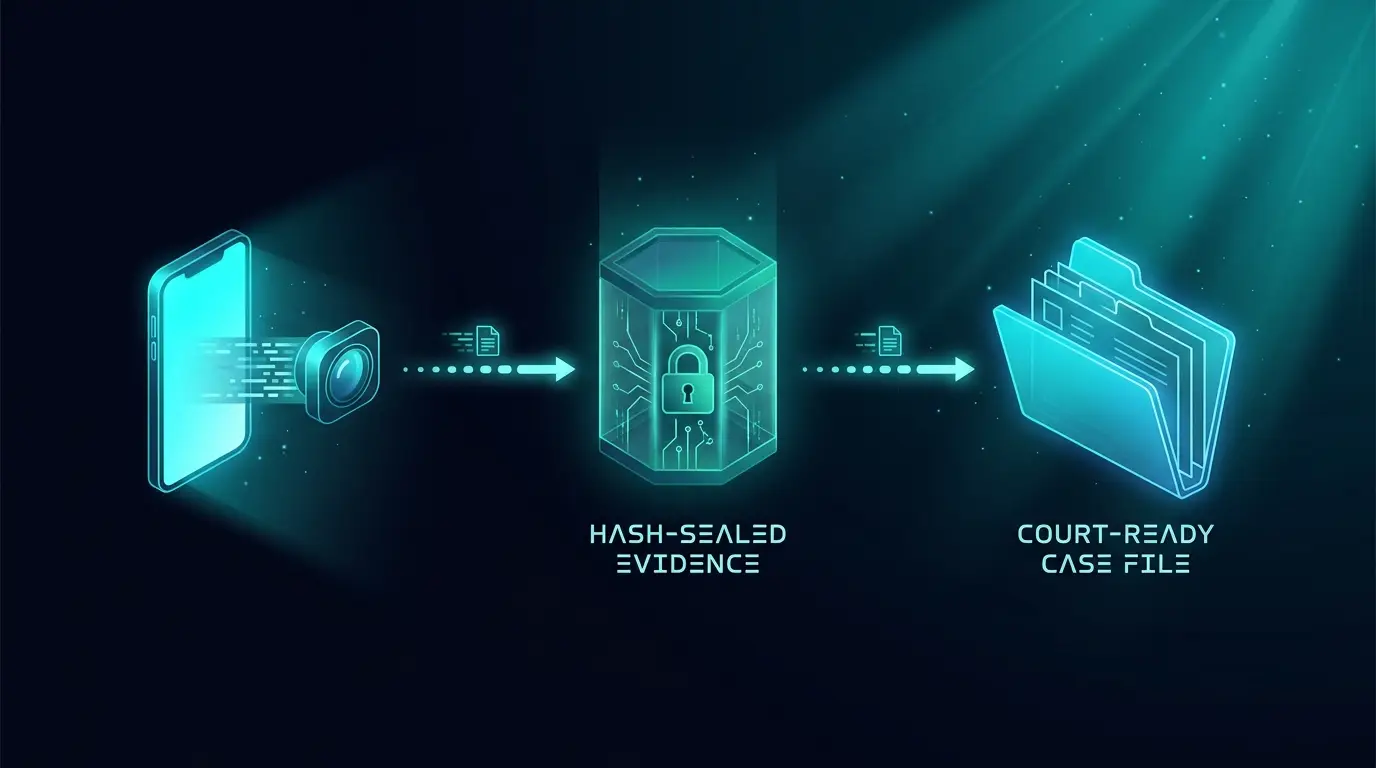
- Generate a cryptographic hash: a SHA-256 hash of the captured file gives you a mathematically verifiable proof that the evidence has not been altered between capture and the warrant application;
- Document the capture in the investigation log: when the content was captured, who captured it, and what tool was used should all be in the investigative record;
- Capture the account context: the suspect's profile page, follower/following counts, bio, and any pinned posts should be captured alongside the specific relevant post, providing context for the affidavit.
Sending a preservation letter to the relevant platform immediately after identifying relevant content is also advisable. Under the Electronic Communications Privacy Act, platforms can respond to preservation requests by retaining data that would otherwise be purged under their standard retention schedules. This backstop does not replace forensic capture of publicly visible content, but it may preserve backend records that are not visible in the public interface.
Documenting the Collection for the Affidavit
The affidavit supporting a search warrant must establish the reliability of the information it presents. For social media evidence, this means the affiant must be able to describe, under penalty of perjury:
- When the content was discovered and by whom;
- What platform the content appeared on and at what URL or account identifier;
- When and how the content was preserved;
- What steps were taken to verify the account's connection to the suspect;
- Whether the content has been modified since preservation (the hash value answers this);
- How the content relates to the criminal activity under investigation.
An affiant who cannot answer these questions because the preservation was not done properly will face challenges at suppression hearings that proper documentation would have prevented. The habit of documenting social media evidence collection as carefully as physical evidence collection is one that experienced digital investigators develop early.
Key principle: the investigation log entry for social media evidence should be as detailed as any other investigative action. Date, time, URL, capture method, hash value, and the investigator's observations about the content's relevance to the investigation should all be recorded contemporaneously.
Drafting the Affidavit: What to Include
A well-drafted affidavit incorporating social media evidence typically includes the following elements, organized to walk the reviewing magistrate or judge through the investigation from initial suspicion to probable cause:
Investigator Credentials and Methodology
A brief statement of the affiant's training and experience with digital investigations, including experience with social media evidence, helps establish the reliability of the affiant's observations and conclusions. Courts give more weight to an affiant who can explain why they identified specific content as significant and how they connected it to the suspect.
Background of the Investigation
The factual context of the investigation, including the offense under investigation, how the investigation began, and what non-social media evidence has been developed, provides the framework within which the social media evidence is interpreted. Social media evidence is most persuasive when it corroborates and extends existing investigative findings, rather than serving as the sole basis for the warrant.
Description of the Social Media Evidence
A specific, factual description of each relevant post or piece of content: the platform, the account name and URL, the date and time visible on the post, what the content shows or says, and how it connects to the investigation. The description should be detailed enough that the magistrate can evaluate the significance of the content from the affidavit alone, without needing to view the actual capture.
Authentication of the Account
An explanation of how the affiant established that the account belongs to the suspect: registration information obtained from the platform, profile photos matching known photos of the suspect, references in the account to identifying information such as a name or vehicle, or other investigative corroboration. An account that cannot be attributed to the suspect is not usable as probable cause against that suspect.
Preservation Statement
A statement that the evidence was preserved using a specified method on a specified date, that the preservation captured the URL and timestamp as visible at the time of capture, and that the integrity of the capture has been verified by hash comparison. This section of the affidavit directly addresses the authentication challenge that defense attorneys will raise at suppression hearings.
Nexus to the Location
An explanation of how the social media evidence connects the criminal activity to the specific place to be searched. This may draw on location data embedded in the posts, independent surveillance corroborating the location, or utility and address records establishing the suspect's connection to the premises.
Warrants for Platform Records: A Different Process
A search warrant for physical premises is different from a warrant or legal process directed at a social media platform seeking account records. When investigators want not just what is publicly visible on a profile, but the backend data the platform holds, a separate legal process is required.
Under the Stored Communications Act, law enforcement can obtain non-content account information with a subpoena, content data with a court order or warrant depending on the category, and in some circumstances with emergency disclosure provisions for imminent harm situations. The process varies by the type of data sought and the platform's compliance procedures.
Key categories of platform data that investigators commonly seek include:
- Subscriber information: name, address, phone number, email address, and IP address used to register the account;
- Login and access records: IP addresses and timestamps for account logins, which can establish geographic location at specific times;
- Device identifiers: device fingerprints that can connect the account to a specific phone or computer;
- Deleted content: some platforms retain recently deleted posts and messages for a period, accessible through legal process even after the visible deletion;
- Private messages: direct messages and other private communications, which require a warrant in most circumstances.
Platform preservation letters should be sent as early as possible in the investigation. Under 18 U.S.C. 2703(f), a platform must preserve records relevant to a criminal investigation for 90 days upon receiving a law enforcement preservation request. This stops the clock on data that would otherwise be purged, buying time to obtain the formal legal process needed to compel production.
Suppression Challenges and How to Prevent Them
Defense attorneys will challenge social media evidence in suppression hearings by attacking the authenticity of the evidence, the reliability of the probable cause foundation, and the staleness of the information. A properly documented collection process, combined with a well-drafted affidavit, preempts most of these challenges.
Under the doctrine from Franks v. Delaware, a defendant can challenge the truthfulness of statements in a warrant affidavit. If a defendant can show that an affiant made false statements about social media evidence, either knowingly or with reckless disregard for the truth, the warrant may be invalidated and the evidence suppressed. This makes the accuracy of the affiant's description of the social media evidence critically important: the description must match what was actually captured, not a generalized recollection of what the investigator thought they saw.
Forensic preservation of social media evidence is the most effective protection against Franks challenges, because it creates a contemporaneous record that can be compared against the affidavit's description. An affiant whose preserved evidence matches their affidavit description, and who can produce the hash verification confirming the evidence has not been altered, has very little exposure to a successful Franks challenge on the social media evidence component.
Tools That Help Law Enforcement Work Faster and More Securely
Law enforcement agencies that handle significant volumes of social media evidence have moved away from manual screenshot collection toward dedicated forensic platforms that automate the preservation workflow and generate proper documentation automatically. The advantages are operational as well as legal: investigators spend less time on manual capture and more time on analysis, and every capture comes with the metadata and hash documentation that the warrant process requires.
Social Media Evidence is used by law enforcement agencies, investigators, and prosecutors precisely for this workflow. Investigators enter a public account identifier, and Social Media Evidence captures the entire account, including posts, comments, videos, and profile information, with SHA-256 hash verification and timestamped capture metadata. The resulting evidence package can be directly cited in a warrant affidavit, with the capture documentation available to support the affiant's attestation.
For investigations involving multiple suspects with interconnected accounts, Social Media Evidence allows investigators to capture and cross-reference multiple accounts, building a network evidence package that supports multi-subject warrant applications. The platform's bulk capture capability is particularly valuable in gang investigations, drug trafficking cases, and fraud schemes where the social media evidence spans many accounts and thousands of posts.
Using a platform like Social Media Evidence also reduces the risk of investigator exposure to Franks challenges: the affiant is not relying on memory or informal notes about what they saw, but on a forensically preserved capture that the defense can verify has not been altered since collection.
Frequently Asked Questions
Can social media posts establish probable cause for a search warrant?
Yes. Courts have regularly upheld search warrants where the affidavit incorporated social media evidence showing contraband, weapons, criminal communications, or location data connecting the suspect to the place to be searched. The evidence must be authenticated and current enough to satisfy the staleness analysis.
How should investigators preserve social media evidence for a warrant affidavit?
Use a forensic capture tool that records the URL, platform timestamp, and generates a hash. Document the capture in the investigation log with date, time, method, and hash value. Screenshots alone are insufficient: they carry no verifiable provenance and create Franks challenge exposure if the defense argues they were fabricated or altered.
What is the staleness problem for social media evidence in warrant applications?
Posts that are weeks or months old may no longer support a current finding of probable cause unless the affidavit establishes ongoing criminal activity or other factors keeping the evidence fresh. Act promptly after identifying relevant content to minimize staleness risk.
Can law enforcement search a suspect's social media without a warrant?
Law enforcement can view and collect publicly accessible social media content without a warrant. Accessing private messages, content behind privacy settings, or account records held by the platform requires a warrant, court order, or other legal process under the Stored Communications Act.
How do courts evaluate the authenticity of social media evidence in warrant affidavits?
Courts assess the overall reliability of the affiant's description of the content. A detailed account of the platform, URL, timestamp, account attribution, and the preservation method, combined with hash verification documentation, gives the affidavit its strongest authentication foundation.
What happens if the social media evidence in the warrant affidavit is found to be inauthentic?
Under Franks v. Delaware, a defendant who can show the affiant made false or recklessly inaccurate statements about the social media evidence may succeed in having the warrant voided and the evidence suppressed. Forensically preserved evidence with verified hash values is the strongest protection against this outcome.
Preserve Social Media Evidence With Warrant-Grade Integrity
Social Media Evidence captures public social media accounts and posts with SHA-256 hash verification, timestamped metadata, and full collection documentation. Used by law enforcement agencies and prosecutors to build warrant affidavits and investigative records that hold up in court.
Start for free