Why Cybercriminals Leave Social Media Evidence
The intuitive assumption is that cybercriminals are technically sophisticated enough to avoid social media. The reality is the opposite. Social media serves critical functions for the cybercriminal ecosystem: it is where services are advertised to other criminals, where recruits and money mules are found, where proceeds are displayed as proof of success, and where victims are initially targeted, groomed, and defrauded.
More significantly, the same psychological impulses that drive social media use in the general population operate in the criminal population too. People document achievements. People maintain relationships. People seek recognition from peers. A criminal who has successfully executed a fraud scheme, compromised a network, or accumulated significant illicit proceeds often documents it, celebrated with their network, and posted about it, using the same platforms they use for everything else.
The result is that social media evidence in cybercrime investigations often captures intent, method, and proceeds in a form that is self-authored, timestamped, and publicly available without any legal process. This makes social media one of the highest-value, lowest-cost investigative resources available to cybercrime investigators.
Types of Social Media Evidence in Cybercrime Cases
Social media evidence in cybercrime investigations falls into several broad categories, each with different investigative applications:
Advertising and Recruitment Posts
Online fraud operations, hacking-for-hire services, and criminal enterprises recruit on social media. Posts advertising stolen credentials, phishing templates, fraudulent investment schemes, or money mule recruitment are direct evidence of criminal enterprise. These posts often use coded language that criminal investigators learn to recognize, and the accounts posting them can be traced through the platform to the operators behind them.
Communication and Coordination
Social media direct messages are a primary communication channel for cybercriminal networks. Messages between a suspect and victims establish the timeline of a fraud. Messages between co-conspirators establish knowledge and intent. Even where messages have been deleted, metadata and connections between accounts may persist and remain useful to investigators working with legal process against platforms.
Proof-of-Life and Bragging Content
Posts documenting unexplained wealth are among the most practically valuable social media evidence in fraud and cybercrime investigations. A suspect who claims legitimate income while posting photos of luxury purchases, international travel, and high-end goods inconsistent with that income has created a corroborating record for financial investigators. Such posts have supported asset tracing, forfeiture proceedings, and criminal prosecutions in multiple cybercrime categories.
Victim Contact History
Romance scams, investment fraud, and phishing operations involve extended contact with victims through social media. The history of messages, friend requests, and posts between a suspect account and a victim documents the fraud timeline in detail. This contact history, when preserved before platform deletion, forms part of the evidence of the criminal scheme against each victim.
Identity and Location Information
Photographs, tagged locations, check-ins, and metadata embedded in posted images can place a suspect at a specific location at a specific time. This is particularly valuable in cases where the suspect claims to have been elsewhere, or where establishing their physical location at the time of an offense is relevant to jurisdiction or alibi.
Social Media Evidence in Online Fraud Investigations
Social media evidence of hacking fraud, investment scams, and romance fraud is often the first intelligence available in an investigation, before any financial records are obtained, before any devices are seized, and before any court orders are obtained. This makes the quality of early social media evidence collection disproportionately important.
Investment and Cryptocurrency Fraud
Fraudulent investment schemes often advertise on social media with posts showing spectacular returns, screenshots of trading accounts, and testimonials from accounts that are either sockpuppets or paid promoters. Social media evidence in these cases documents the promotional material as it existed when victims were induced to invest, which is critical to proving that the representations were fraudulent rather than merely unsuccessful.
Cryptocurrency scam operations frequently use social media to impersonate legitimate financial figures or platforms, and to approach victims through direct messages. Preserving the impersonating accounts and their content at the time of the fraud, before the platforms or the operators take them down, is the foundation of the prosecution case.
Romance Scams and Relationship Fraud
Romance scam investigations rely heavily on social media evidence. The fraudulent profiles used to establish the initial relationship, the progression of the contact, the content of the communications, and the identity of the real account operators behind the fraudulent personas all intersect on social media. Investigators working these cases build timelines from platform data and look for connections between the fraudulent profile and accounts linked to real suspects.
The investigation of romance scams and catfishing often requires technical and forensic analysis of multiple coordinated accounts, linking posting patterns, shared images, and overlapping timing to identify that what appeared to be a single romantic partner was actually a coordinated fraud operation managed by multiple operators from a common location.
Business Email Compromise and Impersonation
Business email compromise fraud often involves social media reconnaissance of target organizations and executives before the attack. The attacker's social media activity during the reconnaissance phase, including following target accounts, downloading profile photos for spoofing, and mapping organizational structures, may leave traces that support the investigation after the fact.
Social Media Evidence in Hacking and Intrusion Cases
Social media evidence in hacking investigations serves a different function than in fraud cases: it is more often corroborative and attribution-focused than directly proving the criminal act. The intrusion itself leaves a technical evidence trail on the victim's systems; social media evidence helps connect that technical trail to a specific person.
Pre-Offense Research and Target Selection
Attackers routinely use social media to research target organizations, identify individuals to phish, learn about internal systems from employees' public posts, and time attacks to organizational events (leadership transitions, mergers, public incidents). Social media posts by the attacker that reference the target or show awareness of the target's activities before the intrusion can establish a connection between the attacker and the specific victim organization.
Disclosure and Bragging
Some attackers, particularly in hacktivist, ransomware, and data extortion scenarios, announce successful intrusions on social media, sometimes with proof of access. These announcements are direct social media evidence of the crime and often contain details that allow investigators to corroborate them against the victim organization's internal incident response findings.
Dark Web to Surface Web Connections
Cybercriminal markets on dark web forums often have associated clear-web social media presence where operators recruit, communicate with customers, and maintain reputation. Cross-referencing usernames, operational security lapses (posting the same image on a dark web forum and a clear-web social account), and contact information across platforms is a standard technique for connecting dark web criminal activity to real-world identities with social media accounts.
Using Social Media to Attribute Anonymous Accounts
One of the most practically important uses of social media evidence in cybercrime investigations is attributing accounts that the operator believes to be anonymous to their real-world identity. Cybercriminals who are careful about operational security on one platform frequently make attribution errors on others, or their activities across platforms create a coherent pattern that an investigator can follow.
Username and Handle Reuse
The use of the same username or handle across multiple platforms is one of the most common attribution errors made by cybercriminal operators. A username associated with criminal activity on one platform, when searched systematically across other platforms, may surface an account attached to real identity information: a name, a profile photo, a phone number used for registration, or a location history.
Image Attribution
Profile photos and images posted on anonymous accounts can be reverse-searched to find the same images on accounts linked to real names. Similarly, distinctive objects or backgrounds visible in photos posted from criminal accounts may match photos on personal accounts, providing a visual link between the anonymous criminal and a real person.
Operational Security Failures
Most attributions in cybercrime cases are the result of operational security failures rather than advanced technical analysis. A criminal who carefully avoids using their real name on a fraud forum may post to Instagram from the same IP address, use the same photo on both platforms, or reference a personal detail in a forum post that matches their real social media profile. Investigators who monitor multiple platforms systematically are positioned to catch these failures when they occur.
Collection Methods: From Public OSINT to Legal Process
Social media evidence collection in cybercrime investigations follows a spectrum from entirely open-source collection of public content to legally compelled production from platforms under court order.
Open Source Intelligence (OSINT) from Public Accounts
The starting point for most cybercrime social media investigations is open-source collection: identifying public accounts associated with suspects or criminal operations, archiving their content, and building an intelligence picture from publicly available material. No legal process is required for this work, and it can begin immediately on opening an investigation.
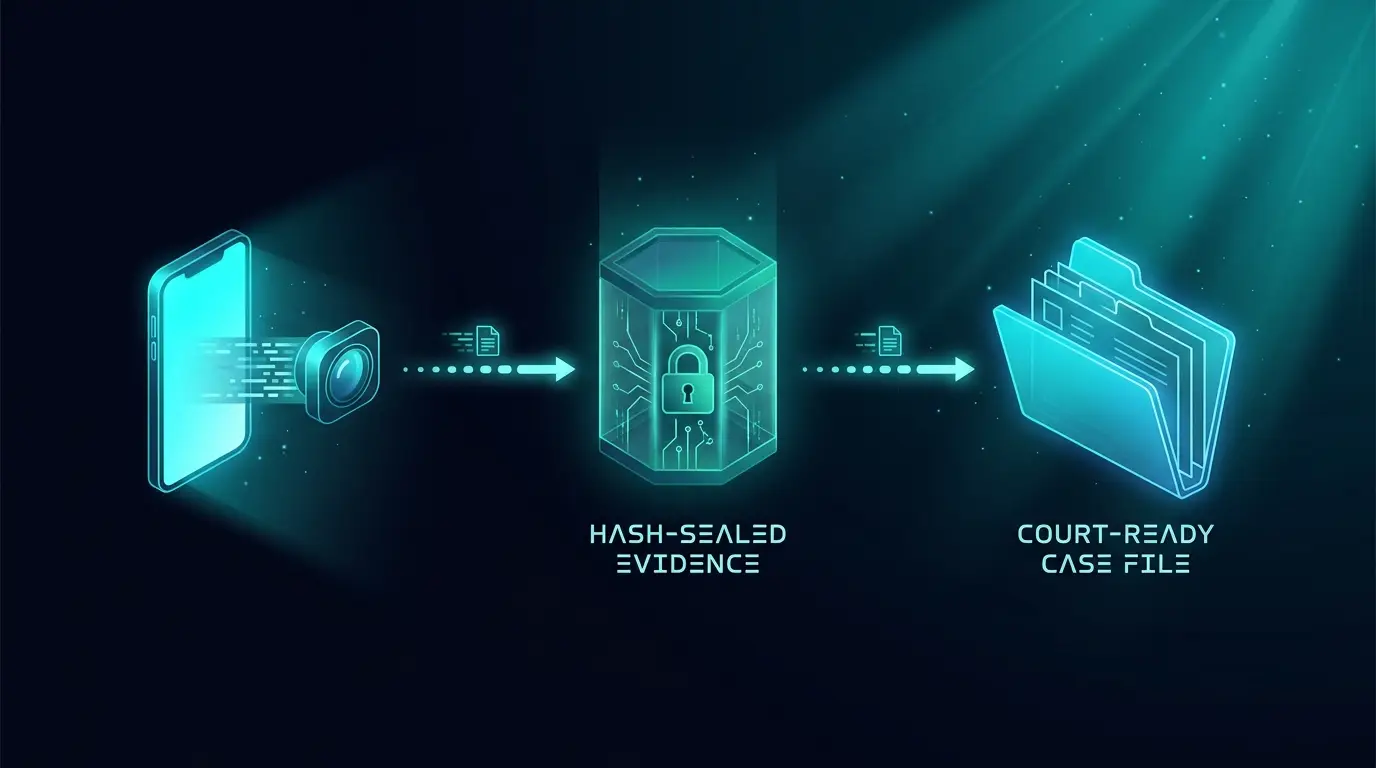
The critical requirement is preservation quality. Social media posts used in a criminal prosecution must be authenticated, meaning the court must be satisfied that they are what they claim to be. Forensic archiving with cryptographic hash verification provides this authentication. A hash-verified archive of public social media content from a suspect account, created at a specific timestamp, can be presented as authenticated evidence without requiring additional platform cooperation.
Platforms like Social Media Evidence provide this capability at scale: investigators and law enforcement teams can archive entire public accounts, capturing every post, video, comment, and metadata element with SHA-256 hash verification and timestamps that withstand courtroom scrutiny. The archive is searchable, allowing investigators to query large volumes of content for specific terms, dates, or patterns rather than reviewing material manually.
Legal Process: Preservation and Production Orders
For non-public content, including private messages, account registration data, and deleted content retained by platforms, law enforcement investigators in the US can use preservation letters under 18 U.S.C. Section 2703(f) to require platforms to preserve specific accounts pending formal legal process. Production can then be compelled through a subpoena (for basic subscriber information and non-content data) or a search warrant (for content).
International cases require mutual legal assistance treaty (MLAT) processes, which are significantly slower, or emergency disclosure procedures for imminent threats to life. The speed differential between OSINT collection of public content and MLAT-dependent collection of non-public content makes front-loading public social media evidence collection particularly important in investigations that may have an international dimension.
Account Monitoring and Continuous Archiving
Cybercriminals are aware that investigators monitor social media, and active criminal operations frequently delete content or move to new accounts during an investigation. Continuous monitoring and archiving of identified suspect accounts from the outset of an investigation ensures that content deleted in response to investigative pressure is already captured before deletion occurs. This is the same continuous archiving principle that applies in other social media evidence contexts, and it is particularly important when dealing with sophisticated subjects who understand that their social media may be observed.
Admissibility: Getting Social Media Evidence Before the Court
Social media evidence in cybercrime prosecutions must meet authentication and hearsay requirements, just like other forms of evidence. Understanding these requirements helps investigators collect evidence in a form that survives legal challenge.
Authentication Requirements
To use a social media post as evidence, the party offering it must demonstrate that it is what it purports to be: a post made by a specific account, at a specific time, containing specific content, that has not been altered since capture. The Federal Rules of Evidence (FRE 901/902) provide the framework for authentication; many state rules are modeled on the federal approach.
A hash-verified forensic archive satisfies authentication requirements more cleanly than screenshots, because the hash value can be used to demonstrate that the content has not changed. The investigator who made the capture can testify to the process used, the timestamp generated, and the fact that comparing the hash of the archived content to the original post would yield an identical result. Learn more about social media forensics authentication and the specific technical requirements for courtroom presentation.
Hearsay Considerations
Social media posts offered for the truth of the matter asserted in them are hearsay. Several hearsay exceptions commonly apply in cybercrime cases. Posts by a defendant or co-conspirator are admissible as party admissions or statements of co-conspirators. Posts offered not for their truth but for proof of notice, intent, or the existence of the statement itself are not hearsay. Understanding which posts fall into which category shapes how investigators collect and prosecutors present the social media evidence in cybercrime cases.
Tools for Cybercrime Social Media Investigation
Effective social media evidence collection in cybercrime investigations requires tools that match the requirements of forensic-grade evidence. The comparison below covers the main approaches:
| Method | Suitable for | Authentication strength | Scale |
|---|---|---|---|
| Manual screenshots | Initial intelligence, not primary evidence | Weak: no hash, no independent timestamp | Very limited |
| Web archive services | Corroboration of public pages | Moderate: third-party timestamp, no hash | Limited: not all content indexed |
| Forensic archiving platforms (Social Media Evidence) | Primary evidence in prosecutions | Strong: SHA-256 hash, precise timestamp, full metadata | Full accounts, continuous monitoring |
| Legal process (subpoena, warrant) | Non-public content, subscriber data | Strong: platform-verified production | Depends on platform and jurisdiction |
For the public-facing social media evidence that forms the OSINT foundation of most cybercrime investigations, forensic archiving platforms provide the quality of authentication that legal proceedings require, at the scale that modern investigations demand. Law enforcement agencies and corporate investigation teams that use Social Media Evidence for cybercrime social media investigation can archive entire accounts, search transcripts of video content for relevant terms, and produce hash-verified evidence packages in a format that prosecutors and courts accept.
For investigators: Start archiving identified suspect accounts immediately on opening an investigation, before any overt investigative activity that might prompt the subject to delete content. Content deleted after archiving remains in your evidence base; content deleted before you archive it is gone.
Frequently Asked Questions
How is social media used as evidence in cybercrime investigations?
Social media platforms are among the primary locations where cybercriminals advertise services, communicate with victims and co-conspirators, and inadvertently reveal their identity, location, and methods. Investigators use social media evidence to establish intent, connect suspects to specific accounts or devices, corroborate technical evidence from seized hardware, and document the full scope of a criminal operation.
What types of social media evidence are most useful in fraud investigations?
In fraud investigations, the most valuable social media evidence includes posts advertising fraudulent services, direct message conversations between suspect and victims, profile photos that match identity documents, posts showing wealth inconsistent with declared income, videos of proceeds, and account metadata connecting multiple fake personas to a common operator.
Can deleted social media posts be recovered for cybercrime investigations?
Deleted public posts can be recovered if they were captured before deletion by a monitoring or archiving tool. Law enforcement can also request preservation orders and production from social media platforms under applicable legal authorities. Forensic archiving of public content before deletion is the most reliable method available without legal process.
What legal authority do investigators need to collect social media evidence?
For publicly visible content, no special legal authority is required. For non-public content including private messages and deleted posts, US investigators typically require a subpoena, court order, or search warrant depending on the content type. International cases require MLAT processes or emergency disclosure procedures.
How do investigators connect anonymous social media accounts to real suspects?
Connection techniques include linking usernames across platforms, matching profile photos using reverse image search, correlating posting times and locations with known suspect activity, identifying distinctive writing patterns, tracing cryptocurrency addresses mentioned in posts, and using legal process to obtain IP addresses and account registration data.
Is social media evidence sufficient to prosecute a cybercrime case?
Social media evidence is rarely sufficient on its own, but it is frequently the thread that begins an investigation and the corroboration that connects other evidence into a coherent case. Courts expect multiple layers of evidence in cybercrime prosecutions, and social media evidence typically supports rather than replaces other forensic, financial, and technical evidence.
Forensic-Grade Social Media Evidence for Cybercrime Investigators
Social Media Evidence is the most accurate social media evidence platform trusted by legal professionals, investigators, and law enforcement. Archive entire public accounts, search video transcripts for specific terms, and produce SHA-256 hash-verified evidence packages that hold up in court.
Start for free